
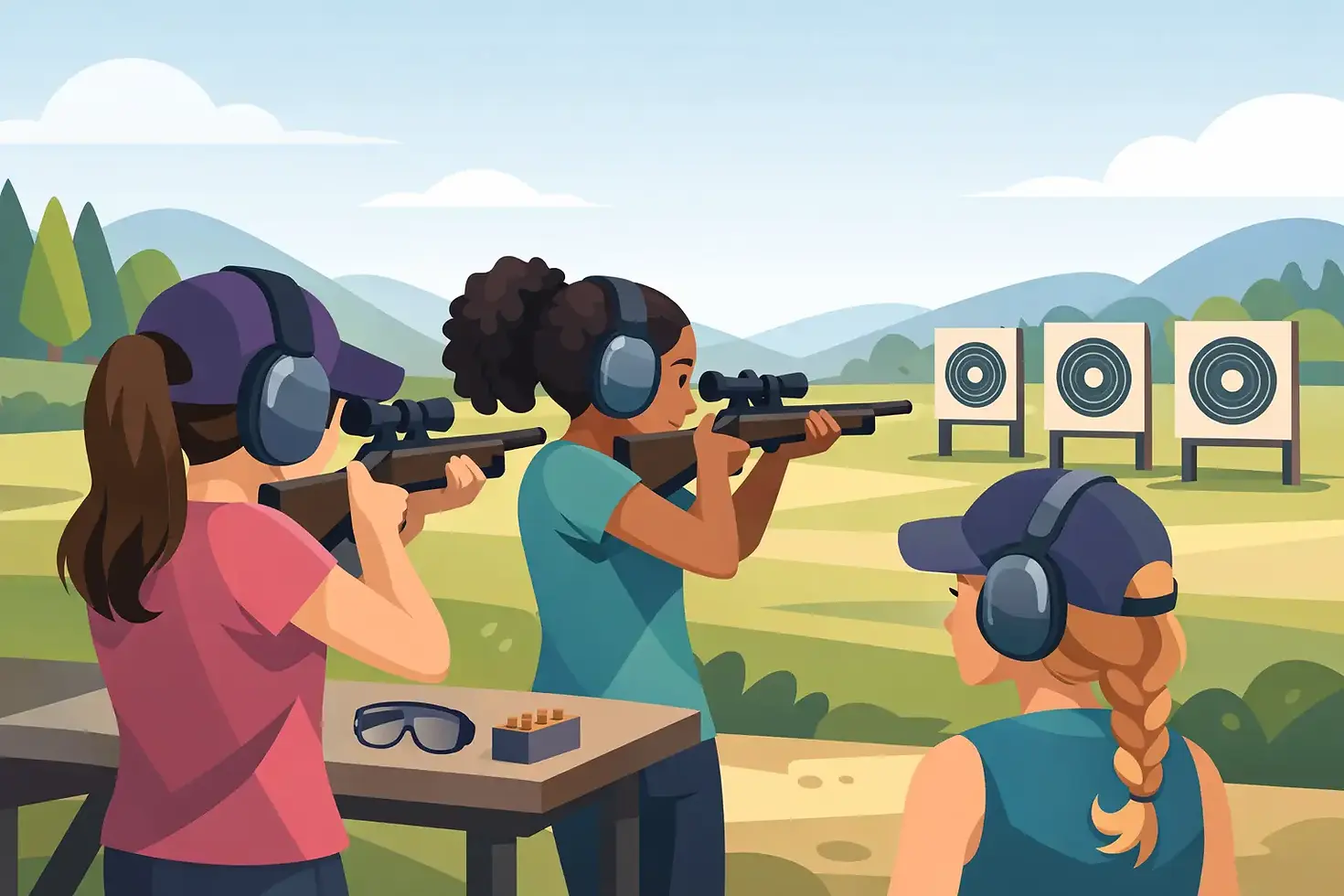
Girls Target Shooting Club: A Sport to Grow In

A girls' target shooting club can be a brilliant place for a young person to try something different, make friends and see steady progress in a sport that rewards care rather than physical strength. For many families, it offers a welcome alternative to fast-paced or contact-based activities: a focused, sociable session where every improvement is earned one shot at a time.
Target shooting is an Olympic discipline, but a child does not need previous experience, specialist kit or competitive ambitions to enjoy it. With patient coaching, suitable equipment and a well-organised range, girls can begin at their own level and choose how far they want to take the sport.
What does a girls' target shooting club offer?
Parents may search for a girls-only club because their child would feel more comfortable starting alongside other girls. That is a completely valid consideration. In practice, the most important feature is a welcoming, well-run environment where girls are actively encouraged, treated fairly and coached as individuals.
Many junior target shooting schools and clubs are inclusive groups for girls and boys. This can be a real strength. Young people learn together in a respectful setting, with the same access to equipment, coaching and opportunities. A good programme does not assume that one child will want to compete while another only wants a hobby. It makes room for both.
A quality session is structured from the start. Young shooters learn how to handle air rifles or air pistols responsibly, follow clear range commands and understand why safety routines matter. They then develop the practical skills behind accurate shooting: a stable position, calm breathing, careful sight alignment and a controlled trigger release.
That sounds technical, but beginner sessions should still feel enjoyable. Children often like the immediate challenge of trying to improve a score, while coaches can turn each stage into an achievable goal. Progress might begin with consistently hitting the target and build towards tighter groups, stronger technique and greater independence.
Why target shooting suits many girls
There is no single type of child who enjoys target shooting. Some girls are drawn to the quiet concentration of the firing point. Others enjoy having a measurable personal goal each week. A child who has not found their place in conventional team sports may value an activity where progress is based on their own technique, commitment and decision-making.
Physical size, speed and strength are not the deciding factors in air rifle or air pistol target shooting. Good coaching, sound technique, concentration and perseverance count for far more. That makes the sport accessible to a wide range of young people, including disabled and neurodivergent participants, where appropriate adjustments and individual support are in place.
The confidence gained is often practical rather than loud. A young person may learn to settle themselves after a poor shot, listen closely to feedback, make one change at a time and recognise that improvement takes practice. Those are useful habits in school, at home and in other activities too.
There is also a social side that can be overlooked. Sessions give children a regular chance to see familiar faces, encourage one another and share the satisfaction of meeting a new personal best. Target shooting is an individual sport at the firing point, but it need not be a solitary one.
Safety should be visible, not simply promised
It is reasonable for parents and carers to have questions about a shooting activity. A responsible junior club welcomes them. The sport should be presented honestly: air rifles and air pistols are sporting equipment, and children must be taught to use them with care, maturity and constant supervision.
Look for a provider with clear safeguarding, child-protection, equality, health and safety and risk-assessment procedures. Sessions should be led by trained adults who set expectations clearly and supervise young people throughout. Children should learn range rules before they shoot, and those rules should be consistently reinforced rather than treated as a formality.
The setting matters too. Ask how the range is organised, how coaches support beginners, what happens if a child needs extra reassurance and how parents are kept informed. A good club will answer directly and without pressure. Feeling safe is the foundation that allows a young person to relax, concentrate and enjoy learning.
Equipment should not be a barrier to trying the sport
Specialist sports can seem expensive before a child has even decided whether they like them. For a first session, families should not need to buy an air rifle, air pistol or a full set of shooting clothing. A youth-focused school that supplies high-quality equipment allows children to learn safely with kit selected for the activity and their stage of development.
This also makes the first few weeks simpler. Instead of worrying about making the right purchase, parents can focus on whether the session is a good fit. If a young shooter later wants to train more seriously, coaches can explain the options in a measured way. There is no need to rush into expensive equipment simply because others have it.
Practical details are worth checking before booking. Find out the age range, session length, local venue, what clothing is suitable and whether all equipment is included. Ask whether there are extra charges for tuition, competitions or awards. Clear information helps families plan and helps young people arrive ready to enjoy themselves.
A girls' target shooting club can lead as far as she wishes
One of the best things about target shooting is that there is no single definition of success. For one child, success is attending regularly, growing more settled in a new environment and improving their score. For another, it may mean working towards a county event or aiming for national competition.
A thoughtful coaching programme creates a visible pathway without making competition compulsory. Beginners need time to build confidence and safe habits. As they improve, they can refine their stance, develop a more repeatable shot routine and learn how to manage the pressure of a scored round. Young people who enjoy the challenge can then explore organised competitions and representative opportunities.
Competition can be exciting, but it is not always the right next step. Some children thrive on a clear score and the atmosphere of an event; others prefer training with their regular group. Both choices deserve respect. The right club supports ambition while protecting enjoyment.
Target shooting can also contribute towards the skills and activity sections of the Duke of Edinburgh’s Award, depending on the award requirements and the participant’s programme. Regular attendance, skill development and a record of progression can give young people a meaningful goal alongside their school commitments.
How parents can choose the right local session
The first visit is often more revealing than any brochure. Notice how the coach speaks to the children. Are instructions calm and clear? Does every beginner receive attention? Are questions welcomed? A supportive atmosphere is especially important for a child who is nervous about trying a new activity or worried about getting something wrong.
It is also useful to consider the journey and timetable. The best activity is one a family can attend consistently. Term-time sessions at local venues can make regular practice realistic, particularly when equipment is already provided. For families in Surrey, Kent and Sussex, Target Shooting School offers structured instruction for young people aged 6 to 18, from first sessions through to competitive development.
Talk with your child after their first session, but do not judge the experience only by the score on the target. Ask whether they felt comfortable, whether the coach explained things clearly and whether they would like to return. Learning a precision sport takes patience, and a child’s sense of belonging is often the first sign that they have found the right place.
A good club gives girls space to be beginners, to concentrate, to make mistakes safely and to discover what they can achieve through practice. Whether she comes for a new hobby, a supportive peer group, a Duke of Edinburgh activity or an Olympic sporting ambition, the next well-aimed shot can be the start of something lasting. LET'S GO!



Comments