
Children's Shooting Classes for Young People

A quiet firing point can be a powerful place for a young person. There is no need to be the fastest runner, the loudest voice or the strongest player. In children’s shooting classes, progress comes from learning to pause, focus, follow a routine and make one carefully considered shot at a time.
For families in Surrey, Kent and Sussex, structured target shooting offers far more than an unusual after-school activity. It is a welcoming route into an Olympic sport, with clear coaching, supplied equipment and goals that grow alongside each child. Some young people come for a sociable new hobby; others find the beginning of a competitive sporting journey. Both are equally valuable.
What children’s shooting classes involve
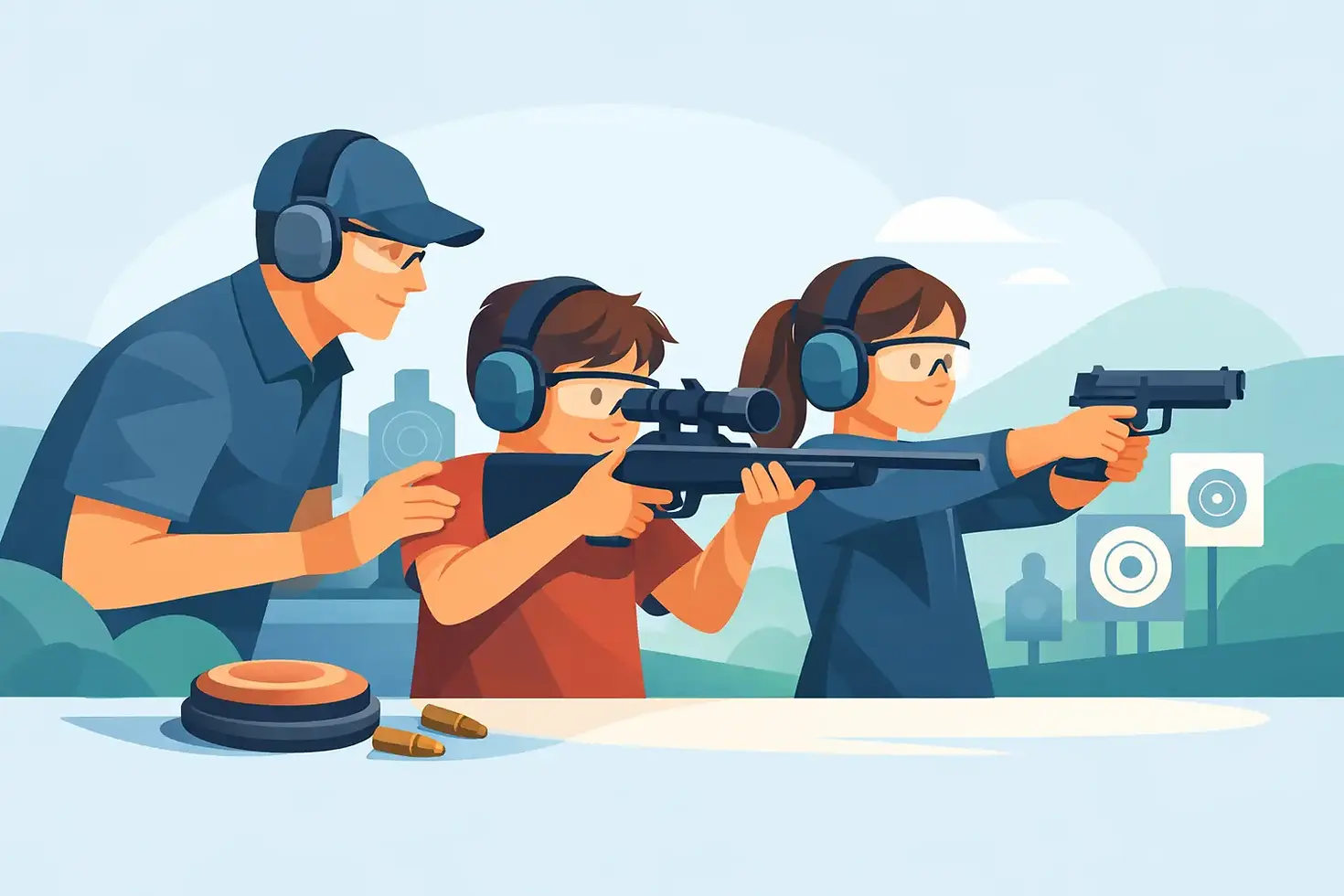
Youth target shooting uses air rifles and air pistols in a controlled sporting setting. The focus is precision, consistency and safe handling, rather than power or spectacle. Sessions are led through clear routines, with young shooters taught how to listen, prepare their position, aim, breathe and finish safely before they think about scores.
A well-run class does not assume prior experience. Beginners are shown each stage at an appropriate pace, while more experienced shooters can work on the small technical details that improve accuracy over time. Equipment is provided as part of the session, so families do not need to buy specialist kit before a child has had the chance to decide whether the sport is right for them.
That matters. Target shooting can look specialised from the outside, but the first steps should feel straightforward. Young people need a suitable venue, expert instruction, the right equipment and enough time to learn without pressure. When those essentials are in place, they can concentrate on enjoying the challenge.
Why target shooting suits so many young people
Target shooting is an individual sport, but it is not a lonely one. Children train alongside peers, encourage one another and share the satisfaction of a personal best. They also learn that a disappointing shot is useful information, not a reason to give up. Resetting, reviewing and trying again are central to the sport.
For children who do not enjoy contact sports or busy team environments, this can be a particularly positive alternative. Physical strength is not the deciding factor. Good technique, attention and perseverance matter far more, which helps create meaningful opportunities for girls and boys, disabled young people and neurodivergent participants.
Every child responds differently. Some enjoy the calm and predictability of a repeatable routine. Others are motivated by targets, badges, competitions or the chance to represent their area. A confident coach recognises these different reasons for attending and gives each young person room to develop in their own way.
There is also a useful balance between independence and support. A shooter is responsible for their own preparation and performance, yet they are never left to work things out alone. Coaches provide practical feedback, reinforce safe habits and help young people turn a difficult session into a manageable next step.
Safety is the foundation, not an extra
Parents are right to ask detailed questions about safety. In a proper youth programme, safety is not a brief talk at the start of term. It is built into every session, every instruction and every movement around the range.
Children learn that equipment is only handled when directed, and that range commands must be followed immediately. They are supervised by trained adults and introduced to procedures in a clear, age-appropriate way. This structure gives young people confidence because they know what is expected of them and why it matters.
A responsible provider should also make safeguarding, child protection, equality, health and safety, and risk assessment visible parts of its approach. Parents should feel comfortable asking about coaching standards, supervision, venue arrangements and how individual needs are supported. Good answers will be clear and practical, not vague reassurance.
The safest environment is often the one where young people feel able to speak up. Encouraging questions, checking understanding and treating every participant with respect create a culture in which children can learn well.
What a first session may feel like
The first session is usually more about familiarity than perfect scores. A child will be introduced to the venue, the coach and the session routine. They may begin by practising posture, sight picture and controlled trigger technique, before putting those skills together on a target.
Some children settle quickly; others need a few visits to feel fully at ease. That is normal. Target shooting rewards steady learning, and early coaching should celebrate safe habits and concentration as much as the result on the card.
Parents can help by setting a simple expectation: their child does not need to be naturally brilliant. They only need to be ready to listen, have a go and keep practising. Comfortable clothing and a positive attitude are usually a much better starting point than expensive equipment.
From a local class to real progression
One of the strengths of organised children’s shooting classes is that they can offer a genuine pathway. A young person may start by attending a local term-time session for enjoyment, then choose to build skills through more regular training and friendly events. If competition appeals, there can be routes towards county and national opportunities.
Competition is not compulsory, and it should not define the experience. It can, however, give motivated shooters a clear focus and teach useful habits around preparation, resilience and respectful conduct. Learning to manage nerves, wait for a detail to be checked or recover after a lower score are sporting lessons that carry well beyond the range.
Target Shooting School supports both recreational participation and progressive development, so families do not have to decide a child’s sporting future on day one. Young people can discover what they enjoy first, then take the next step when they are ready.
The sport can also support recognised Duke of Edinburgh Award activity requirements at the appropriate levels. For teenagers working towards an award, regular target shooting provides a structured activity they can commit to over time, with tangible evidence of attendance, effort and development.
Choosing the right class for your child
The best class is not necessarily the closest one or the most competitive one. It is the place where your child can learn safely, feel respected and see a realistic path forward. Before enrolling, consider the age range, the instructor-to-participant support, whether equipment is supplied and whether the venue is practical for your family’s routine.
Ask how beginners are introduced, how children with additional needs are supported and whether there are options for those who want to progress. It is also worth finding out what the term-time commitment looks like. Regular practice helps, but a programme should make room for the fact that young people have schoolwork, family life and other interests too.
A child who wants a relaxed weekly activity may thrive in the same environment as one with competitive ambitions, provided coaching is adaptable. The important thing is that neither feels they have to become someone else to belong there.
The skills that stay with them
The target is visible, but much of the value lies in what happens before the shot. Young people learn to control their breathing, manage distractions and stay patient when improvement is gradual. They become more aware of their own routines: how preparation affects performance, how emotions can be settled, and how small adjustments can make a difference.
Those are useful skills at school, in other sports and in everyday life. A young person who has learned to pause and reset after an imperfect attempt has gained something more lasting than a score. They have practised perseverance in a real, measurable way.
For the child who has not yet found their sport, target shooting can be the place where concentration becomes confidence. For the young person who already loves a challenge, it can be a sport with room to keep growing. A safe first session may be all it takes to find out - LET’S GO!


Comments